Likert Scale vs NPS: When to Use Each Method


Likert and NPSIf you’ve ever built a customer or employee feedback survey, you’ve likely encountered two popular tools: the Likert scale and the Net Promoter Score (NPS). Both are effective for measuring satisfaction, loyalty, and engagement — but they serve different purposes.

Understanding when to use each method can transform how you collect and act on feedback. In this article, we’ll compare the Likert scale vs NPS, explain their key differences, and show how they can complement one another to give you a complete view of sentiment.

Understanding the Likert Scale

The Likert scale is a structured way to measure opinions, attitudes, and perceptions. It asks respondents to rate their level of agreement or satisfaction across a series of statements — usually on a 5-point or 7-point scale.

Example:

“I am satisfied with the support I receive from customer service.”

  • Strongly Disagree

  • Disagree

  • Neutral

  • Agree

  • Strongly Agree

Each point captures the degree of feeling, offering a nuanced understanding of how respondents think.

To learn more about how this scale works, revisit What Is a Likert Scale and How Does It Work? 

Understanding the Net Promoter Score (NPS)

The Net Promoter Score (NPS) measures customer loyalty and advocacy through one simple question:

“How likely are you to recommend our company/product/service to a friend or colleague?”

Respondents rate their likelihood from 0 (Not at all likely) to 10 (Extremely likely).
Their answers fall into three categories:

  • Promoters (9-10): loyal advocates who drive growth.

  • Passives (7-8): satisfied but not enthusiastic.

  • Detractors (0-6): unhappy customers who may harm your brand reputation.

NPS is calculated by subtracting the percentage of detractors from promoters.
For example, if 70% are promoters and 10% are detractors, your NPS = 60.

This simplicity makes NPS powerful for tracking overall satisfaction over time, but it doesn’t reveal why respondents feel the way they do — that’s where the Likert scale shines.

When to Use the Likert Scale

Use a Likert scale when you want to:

  • Measure attitudes, perceptions, or satisfaction levels across multiple topics.

  • Identify the root cause of opinions — for example, what drives dissatisfaction or engagement.

  • Collect data that’s easy to quantify, segment, and compare.

It’s especially valuable in:

  • Employee engagement surveys

  • Customer satisfaction studies

  • Market research and brand perception tracking

If you’re new to Likert analysis, our guide How to Analyze Likert Scale Data Like a Pro provides a detailed step-by-step approach to transforming responses into actionable insight.

When to Use NPS

Use NPS when your goal is to:

  • Measure loyalty and advocacy quickly.

  • Benchmark performance over time or across industries.

  • Track customer sentiment after a major change — such as a new product launch or pricing update.

Because it’s just one question, NPS delivers high response rates and is easy to compare across periods or competitors. However, it doesn’t provide context — it tells you how people feel, not why.

Combining Likert and NPS for Maximum Insight

The most effective feedback strategies use both tools together.
Here’s how you can structure your survey:

  1. Start with an NPS question to gauge loyalty at a high level.

  2. Follow up with Likert statements to uncover reasons behind that score.

Example:

  • NPS Question: “How likely are you to recommend our service to a friend?”

  • Likert Follow-Ups:

    • “Our customer service resolves issues quickly.”

    • “I feel that the product provides good value for money.”

    • “The website is easy to navigate.”

This combined method gives you both a quantitative loyalty index (NPS) and qualitative insight (Likert).
You can then segment results to see, for example, which factors most influence your promoters or detractors.

For guidance on writing clear, balanced Likert statements, revisit Common Mistakes When Using the Likert Scale.

How Scale Design Impacts Comparison

A key difference between Likert and NPS is their response range.

  • Likert scales are ordinal (ranked categories, usually 5–7 points).

  • NPS is interval (a continuous 0–10 numeric range).

Because of this, NPS data is easier to calculate as a single score, while Likert data provides richer context.
If you plan to compare or merge both datasets, normalize the values — for instance, convert NPS scores into a 0–5 or 0–7 range for consistency.

The Psychological Dimension

The Likert scale measures feelings (“I agree,” “I disagree”), while NPS measures behavioral intent (“I will recommend”).
This psychological difference is important:

  • A respondent may agree that a product is good (Likert) but still be unlikely to recommend it due to price or preference (NPS).
    Using both scales together helps reveal these contradictions — an insight that pure NPS surveys often miss.

Advantages of Using Both Together

When integrated into one survey strategy, Likert and NPS offer a complete feedback ecosystem:

  • Likert scale → identifies emotional drivers behind satisfaction or dissatisfaction.

  • NPS → quantifies loyalty and advocacy.

  • Together → give a 360-degree understanding of engagement, retention, and improvement areas.

This combination is especially powerful in SaaS, HR, and customer experience programs where decision-making depends on both perception and behavior.

Example: How Enquete.com Uses Both

At Enquete.com, you can easily combine these question types in one survey.
For instance, a product feedback form might include:

  1. An NPS question to measure overall satisfaction.

  2. A series of Likert scale questions to identify which features influenced that score.

This allows you to track loyalty over time while also understanding the reasons behind it — without switching tools or datasets.

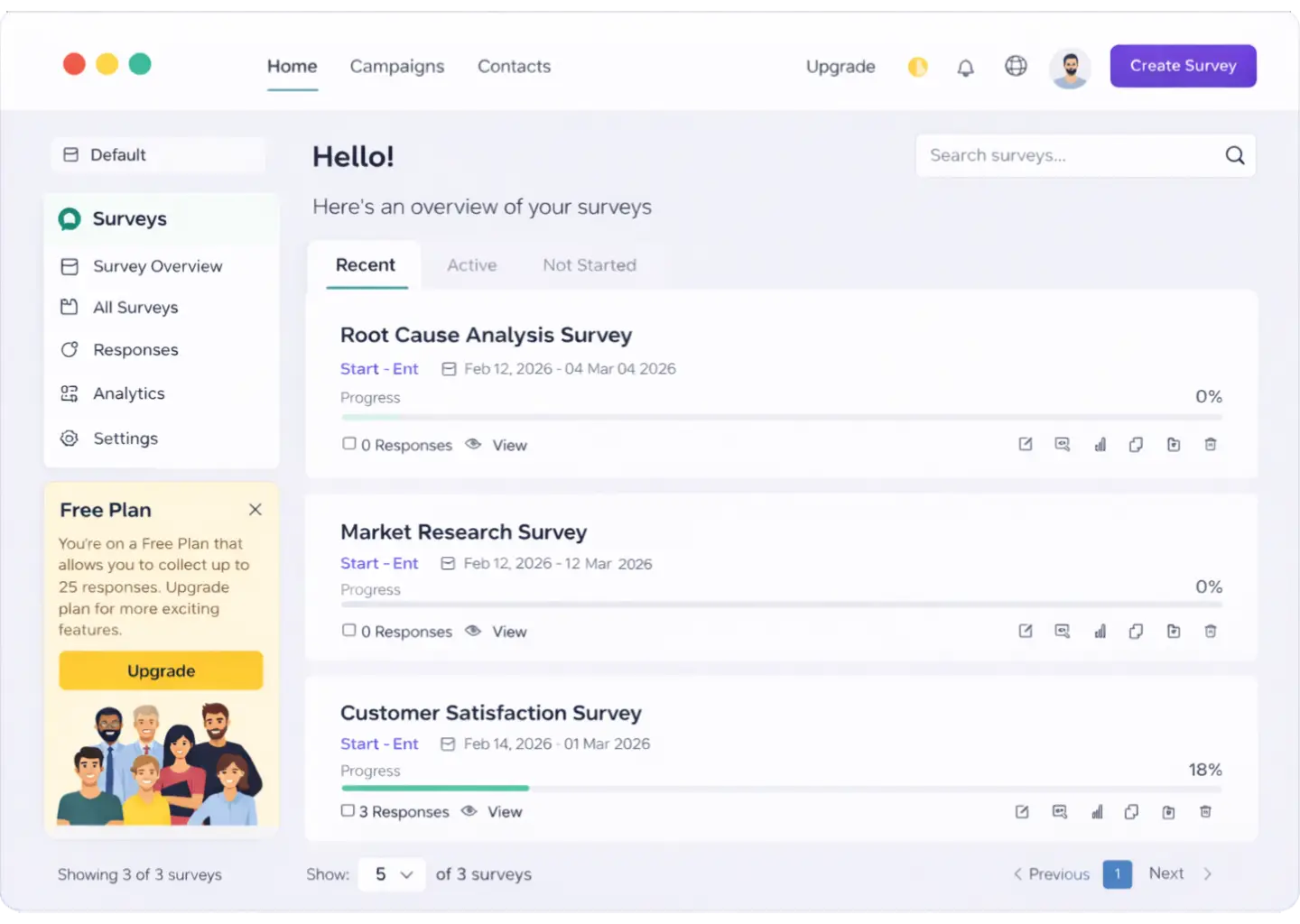
By visualizing both metrics in a single dashboard, you can identify clear links between customer sentiment and business outcomes.

Final Thoughts

The Likert scale and Net Promoter Score are not competitors — they’re complementary frameworks.
Use NPS when you need a quick loyalty metric, and the Likert scale when you need depth and detail.

Together, they provide a comprehensive view of how your customers or employees truly feel.

Start creating a survey