Shopping cart
Your cart empty!

Your cart empty!
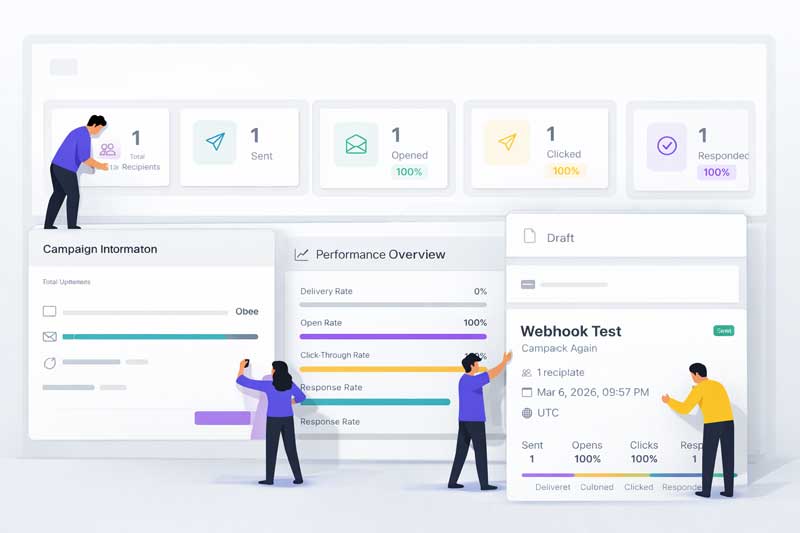
A survey campaign is much more than sending out a questionnaire and hoping people respond. When you run a survey campaign properly, you create a structured process for collecting feedback from the right people, at the right time, for the right reason. That distinction matters. A survey on its own can generate data, but a survey campaign is what turns that data into direction. It gives you a clearer way to understand customer expectations, employee sentiment, product perception, or service performance, and then use those findings to make better decisions.
If you want your survey efforts to produce meaningful outcomes, you need to think beyond the form itself. You need to think about timing, targeting, delivery, follow-up, analysis, and action. That is where many organizations struggle. They may have good intentions, but without a campaign mindset, they often collect feedback that is too broad, too late, or too disconnected from the business question they actually need answered. A strong survey campaign solves that problem by giving your research activity structure and purpose.
A survey campaign is a focused feedback initiative designed around a specific objective, audience, and time frame. It is not simply a one-off survey link distributed randomly. It is a coordinated effort to gather input in a way that supports a defined business need. That need could be improving customer retention, evaluating a new onboarding experience, measuring employee engagement during change, or understanding how users react to a recently launched feature. The key is that the campaign exists to answer a concrete question and support a decision.
When you approach surveys this way, you stop treating feedback collection as an isolated task and start treating it as part of your strategy. You begin by identifying what you need to learn. Then you determine who should be asked, which questions will surface the right insight, which channel will produce the strongest response, and how long the campaign should run. Once responses start coming in, you evaluate the results in context and use them to guide improvements. That is what makes a survey campaign valuable. It connects research directly to action.
You use survey campaigns because they help you replace guesswork with evidence. In many organizations, teams make decisions based on assumptions about what customers want, what employees feel, or why users behave in a certain way. Sometimes those assumptions are correct, but often they are incomplete. A survey campaign gives you a direct path to the people whose opinions actually matter. Instead of inferring dissatisfaction from churn alone, you can ask what caused it. Instead of assuming a process is clear, you can measure whether it felt easy or frustrating. Instead of waiting for complaints to accumulate, you can identify issues early and address them proactively.
This is especially important when you are working in environments where experience and perception have a direct effect on outcomes. If you manage customer experience, product development, HR initiatives, service quality, or brand performance, you need more than raw operational data. Metrics can show you what happened, but survey feedback often tells you why it happened. That difference is what makes survey campaigns such a powerful research and decision-support tool.
One of the most important parts of running a successful survey campaign is knowing when to launch it. Timing influences both the quality of the responses and the usefulness of the insights. You should not run a campaign simply because you can. You should run one because there is a relevant moment, a clear information gap, or a decision that needs support.
A strong time to launch a survey campaign is when you need answers to a specific business question. Perhaps customer retention has declined, conversion rates have dropped, or users are not adopting a feature you expected them to use. In cases like these, a campaign helps you move beyond speculation. You are no longer asking for feedback in a vague or exploratory way. You are asking because there is a real issue to diagnose and a clear reason to collect evidence.
You should also consider launching a survey campaign after a meaningful change. If you introduce a new product feature, redesign your onboarding flow, update pricing, change support processes, or restructure internal operations, you need to understand how that change is experienced by the people affected. Feedback gathered close to the moment of change is often far more valuable than feedback collected much later, because respondent memory is fresher and the experience is easier to evaluate accurately.
Another good moment is when your operational data starts showing early warning signs. Falling usage, higher complaint volumes, increased cancellation rates, and lower engagement can all signal that something is wrong. But those indicators usually do not explain the underlying cause on their own. A survey campaign helps you investigate the issue before it becomes more costly. It allows you to hear directly from customers or employees while there is still time to respond.
Survey campaigns are also highly effective when tied to key lifecycle moments. Renewal periods, upgrades, re-engagement efforts, post-purchase follow-ups, onboarding milestones, and exit stages all create natural points for feedback collection. At these moments, respondents are close enough to the experience to provide relevant answers, and the insights you gather can support immediate action. For example, feedback before renewal can help you identify dissatisfaction before a contract decision is made. Feedback during onboarding can reveal whether a user is likely to adopt your product successfully.
Finally, you may want to launch a survey campaign when you are testing a broader feedback strategy. Sometimes you are not ready to build an always-on feedback program across every touchpoint. In that case, a focused campaign gives you a practical starting point. You can test your survey length, delivery channels, question design, reminder strategy, and analysis process on a smaller scale before you expand further. This makes the campaign not just a research exercise, but also a learning mechanism for improving your future approach.
Every successful survey campaign begins with a clear objective. This is where many projects either gain momentum or lose direction. If your goal is too vague, your campaign will be vague as well. You may end up asking too many disconnected questions, surveying the wrong audience, or collecting responses that do not help you make a meaningful decision.
A strong objective should answer a simple question: what exactly are you trying to learn, and what will you do with that information? You might want to understand why trial users are not converting, measure post-support satisfaction, assess the impact of a policy change, or evaluate customer loyalty after a service rollout. Each of these objectives leads to a different campaign design. The objective influences the people you invite, the questions you ask, the timing of the survey, and the way you interpret the results.
When your objective is well defined, your survey becomes more focused and more respectful of the respondent’s time. You avoid including unnecessary questions just because they might be interesting. Instead, you concentrate on what is relevant to the decision at hand. That discipline improves completion rates and also improves the quality of your findings.
Even a well-designed survey campaign will underperform if it reaches the wrong people. Audience selection is one of the most critical parts of campaign design because relevance drives response quality. When respondents feel that a survey genuinely relates to their experience, they are far more likely to provide thoughtful and useful answers.
You should begin by identifying who is best positioned to answer your research question. If you want to understand onboarding quality, you should survey new users rather than your full customer base. If you want to measure post-purchase satisfaction, you should target recent buyers. If your goal is to understand employee morale during organizational change, you may need to segment by department, seniority, or location to get a more accurate view.
This is where segmentation becomes essential. Broad campaigns can be useful, but targeted campaigns are often more informative. By focusing on the right subgroup, you improve both the precision of the data and the relevance of the conclusions. You also reduce survey fatigue, because you are not asking people to respond to questionnaires that do not clearly apply to them.
Before you write the survey itself, you need to determine what kind of feedback will best answer your objective. In many campaigns, this means choosing the right measurement model. If you want to understand loyalty and likelihood to recommend, Net Promoter Score may be appropriate. If you want to measure satisfaction after a specific interaction, Customer Satisfaction is often a better fit. If you want to understand how easy or difficult an experience felt, Customer Effort Score may be more useful. These frameworks are widely used because they provide a structured way to evaluate key dimensions of experience.
That said, no single metric can carry the full burden of interpretation. Scores are useful because they create a benchmark, but they rarely explain themselves. A respondent may give you a low rating for reasons that are not immediately obvious. That is why effective survey campaigns often combine a primary measurement question with a follow-up question that explores the driver behind the score. The score gives you a clear signal; the follow-up gives you the context you need to act on it.
You should therefore think carefully about what you want your respondents to evaluate and what additional explanation you need from them. The most effective campaigns are usually not the longest. They are the ones that capture a meaningful indicator, gather just enough explanation, and leave you with insight that is practical rather than abstract.
Question design is where research quality becomes visible. If your questions are unclear, biased, too broad, or disconnected from your objective, your results will be difficult to trust. A strong survey campaign uses questions that are precise, relevant, and easy to answer. Every question should have a purpose. Every response should help you understand something that matters.
In practice, this means keeping the survey focused. One effective approach is to start with a key score question, follow with a question that helps explain the score, and then include an open or structured follow-up that points toward action. This kind of sequence works because it captures both measurement and meaning. You are not just learning that satisfaction dropped; you are learning where and why it dropped.
You should also pay attention to language. Use plain, direct wording. Avoid asking two things in one question. Avoid loaded phrasing that pushes respondents toward a particular answer. Keep answer choices mutually clear. And always remember that the quality of your analysis depends heavily on the quality of your instrument. If you want actionable findings, your questions must be designed with that outcome in mind.
A survey campaign is only as strong as its delivery strategy. Even a well-designed survey can fail if it reaches respondents in the wrong context. Channel choice matters because it influences visibility, convenience, timing, and completion behavior. You should choose a channel based on where your audience is most likely to engage thoughtfully with the survey.
For some campaigns, email is the best choice because it allows you to target a known audience and control timing more precisely. For others, website popups or embedded surveys make more sense because they capture respondents in the moment of experience. In-app surveys are particularly useful when you want feedback tied to product usage. QR codes can be effective in physical environments such as events, retail, healthcare, or field operations. Kiosk mode may be especially useful in on-site feedback settings where immediate response is valuable.
The right channel is not simply the one that is easiest to activate. It is the one that best matches the respondent’s context. If the survey feels naturally connected to the moment, completion is more likely and the responses are often more accurate. Good channel selection therefore improves not only response rates, but also data validity.
Timing has a direct effect on campaign performance. If you send too early, the respondent may not have had enough experience to evaluate meaningfully. If you send too late, recall may fade and the response may become less accurate. The ideal timing depends on the type of experience you are measuring, but in general, the closer the survey is to the relevant moment, the more reliable the feedback tends to be.
You should also decide how long the campaign should remain open. A short, focused campaign may create urgency and deliver quick insights. A longer campaign may be more appropriate when response opportunities depend on slower traffic or a broader lifecycle period. What matters is that the campaign has a deliberate window. You should know when it starts, when reminders go out, and when data collection ends.
Reminder strategy also deserves careful thought. Reminders can significantly improve participation, but only when used thoughtfully. Too many reminders can create annoyance and reduce trust. Too few can mean you miss respondents who simply overlooked the first invitation. A balanced reminder schedule helps you maximize response without damaging the respondent experience.
Launching a survey campaign is not the end of the work. It is the point at which observation becomes essential. While the campaign is active, you should monitor how it is performing. Response rates, completion rates, partial completions, drop-off points, and open-text quality can all reveal whether the campaign is working as intended.
Live monitoring allows you to correct issues while they are still fixable. If response volume is weak, you may need to adjust your subject line, timing, or audience segment. If completion drops sharply halfway through the survey, that may indicate a problem with question length, wording, or flow. If responses are coming in but the feedback is too shallow, you may need to refine your follow-up questions in the next iteration of the campaign.
This is one of the major advantages of thinking in campaign terms rather than treating surveys as static forms. A campaign can be observed, evaluated, and improved as it runs. That makes it far more effective as a research process.
The real value of a survey campaign emerges after collection, when you begin analysis and interpretation. This is the stage where you move from data to insight. Scores, comments, distributions, and trends only become useful when you place them in context and connect them to action.
You should start by identifying the main signal. Did satisfaction improve or decline? Which customer segment responded most negatively? Which themes appear repeatedly in open responses? Are certain stages of the journey producing more frustration than others? These are the types of questions that analysis should answer.
From there, the next step is prioritization. Not every finding should carry the same weight. Some issues are common but minor. Others are less frequent but strategically important. Good analysis helps you identify what deserves immediate action, what requires further investigation, and what can be monitored over time. The goal is not simply to report feedback, but to use it to guide better decisions.
This is also the stage where closing the loop matters. When appropriate, feedback should not disappear into a report. It should inform improvements that stakeholders can recognize. Whether you are adjusting a product flow, improving support processes, redesigning communication, or addressing internal concerns, respondents are more likely to trust future campaigns when they see that feedback leads to visible change.
If you want to run survey campaigns effectively, you need a platform that supports more than survey creation alone. You need one that helps you manage the entire campaign process, from design and distribution to response tracking and analysis. This is where Enquete stands out.
 Enquete is especially strong because it supports multiple ways to launch and manage survey campaigns. You can distribute surveys through email, shareable links, website embeds, popups, QR codes, and kiosk mode. That flexibility matters because different audiences respond best in different contexts. Instead of forcing every campaign into one delivery model, you can choose the method that matches the experience you want to measure.
The platform is also well suited to both straightforward and more advanced campaign workflows. If you need to launch a simple customer feedback campaign quickly, you can do that efficiently. If you need something more structured, you can build a more polished experience with customized survey flows, branded elements, intro and closing pages, and tailored question formats that align with your research objective. This gives you the ability to adapt campaign design to the seriousness and complexity of the insight you need.
Another major advantage is visibility. Survey campaigns are most useful when you can see results clearly and interpret them without friction. Enquete supports real-time reporting, readable visualizations, export options, and AI-supported insights that help you move faster from response collection to understanding. For teams that need to act on feedback rather than simply store it, that makes a substantial difference.
Most importantly, Enquete fits the way modern organizations actually work. Survey campaigns are rarely isolated to one function. Customer success teams use them to monitor satisfaction. HR teams use them to evaluate sentiment and engagement. Product teams use them to validate decisions and understand friction. Researchers use them to gather structured evidence across audiences. A platform that can serve all of those needs while keeping campaign execution practical has a clear advantage.
Many survey campaigns fall short not because surveys are ineffective, but because the campaign was poorly designed from the start. One common mistake is launching without a clear objective. When you do not know what decision the campaign is meant to support, the survey tends to become too broad, and the results become difficult to use.
Another frequent mistake is targeting the wrong audience. Even excellent questions will not generate useful insight if the respondents are not the people closest to the experience you want to understand. Poor timing is another issue. Asking too early or too late can distort feedback and reduce its practical value.
You should also avoid making the survey unnecessarily long. Length often reduces completion quality, especially when respondents do not see a strong connection between the questions and their experience. And perhaps the most damaging mistake of all is collecting feedback without acting on it. When respondents feel that nothing changes, future response rates and trust can decline.
A successful survey campaign does not happen by accident. It is the result of careful choices about purpose, audience, measurement, timing, delivery, and analysis. When those elements align, survey campaigns become one of the most effective ways to understand experience and improve decision-making.
If you want better feedback, do not start by asking more questions. Start by asking better questions, at the right time, to the right people, in the right context. That is the essence of an effective survey campaign.
And if you want a platform that helps you execute that process professionally, Enquete gives you the tools to do more than just send surveys. It helps you run survey campaigns in a way that is structured, flexible, and built for action.